Gratin Dauphinois
Dinner
 November 24, 2025
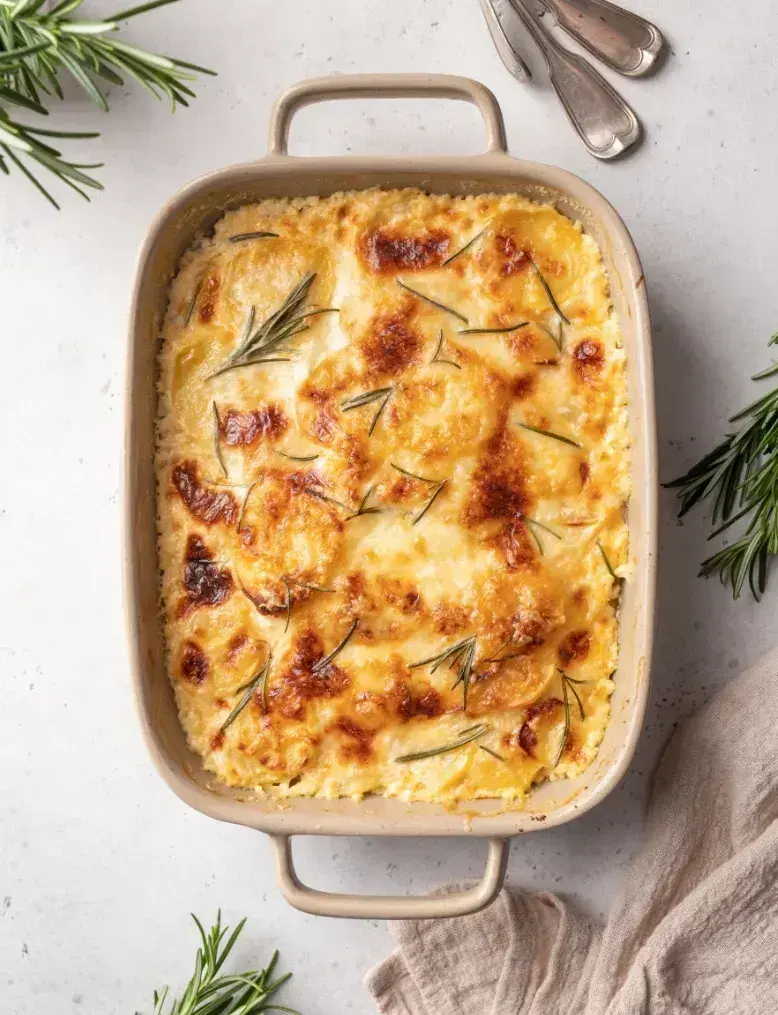
Gratin Dauphinois
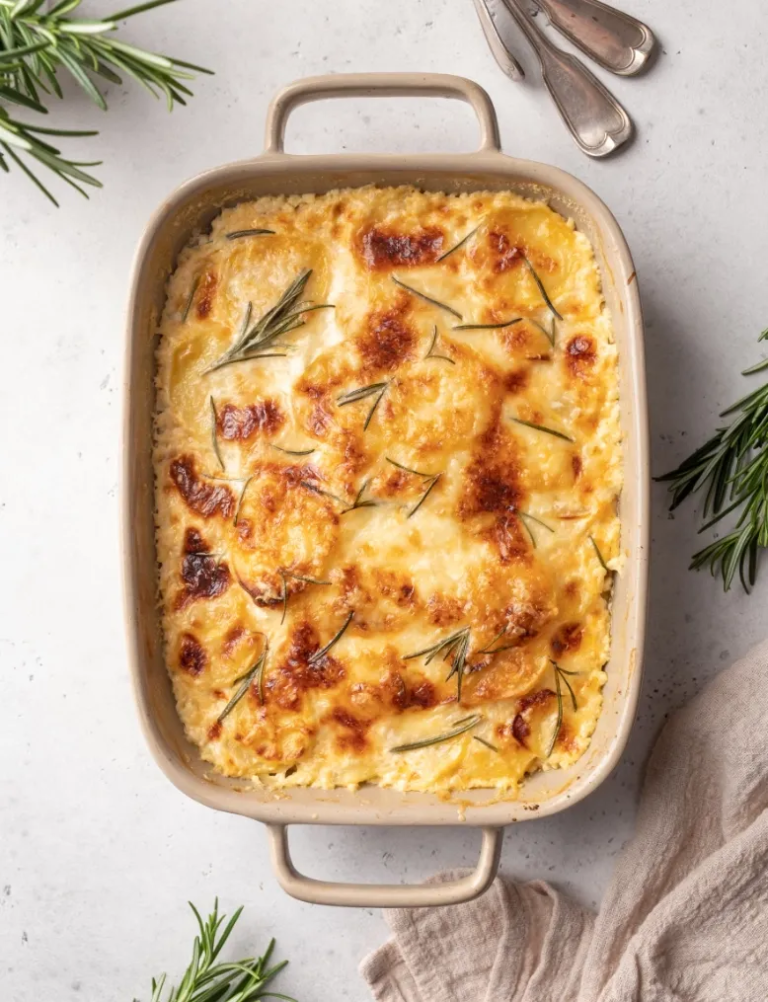
Thin slices of potato layered in a garlic-rubbed dish, drowned in cream and milk, then baked low and slow until golden on top and melting underneath. Rich, velvety, and deeply savoury. This is the gratin dauphinois the way it's been made in the Dauphiné since 1788!
November 24, 2025
Disclosure: This post may contain affiliate links which provide us a small commission when used for purchase. Please read my disclosure policy for more information. I am grateful for your support!
If you love a good tartiflette or a pommes Anna, I can promise you’ll fall for this gratin dauphinois too. To me it’s a completely normal potato side I grew up eating without thinking twice, but it wasn’t until I lived outside France that I realised what a luxury it actually was.
It’s what I reach for when autumn arrives, usually alongside a piece of fried or oven-baked fish. And if you happen to own a few little cast-iron pots, you can make individual ones for each guest and look like you tried far harder than you did. Lovely for the holidays, or any occasion really.
One warning, though. It’s so rich and creamy that you’ll end up making it more often than your scales would like!
Table of Contents
Where gratin dauphinois comes from
Gratin dauphinois comes from the Dauphiné, the mountainous region around Grenoble in southeast France, where it started as farmhouse cooking: potatoes, milk and garlic, baked slowly in whatever dish sat by the fire. It was peasant food built on what the mountains gave you, and it’s barely changed since. The first written mention is from 1788, at a grand dinner in Gap, and the recipe served then is essentially the one below.
The name causes some confusion, so it’s worth clearing up. Dauphinois means from the Dauphiné, and the real thing has no cheese, no eggs and no onions. Just potatoes, cream, milk, garlic and butter. That’s not me being a purist; it’s the line the Dauphiné itself draws, firmly enough that adding cheese in Grenoble is treated as an insult to the region.
The cheese version is a different, genuine dish with its own name: the gratin savoyard, from neighbouring Savoie, made with stock and Beaufort. It’s excellent, but it isn’t this. And the reason the distinction matters for cooking, not just pride, is texture: in a gratin dauphinois, the starch from the unrinsed potatoes thickens the cream into something silky that clings to every slice. Cheese would mask exactly that. The golden top you’re after here comes from the cream and the potato starch itself, not from anything melted over it.
Ingredients
- Potatoes — the whole dish, and the variety matters. You want one waxy enough to hold its shape but starchy enough to drink up the cream. Maris Piper is the best all-rounder in UK shops, and Charlotte works well too. Avoid very floury ones like King Edwards, which collapse, and very waxy new potatoes, which won’t absorb the cream.
- Whole milk and double cream — the two together, which gives richness without being as heavy as all cream. This is the cooking liquid and half the flavour.
- Garlic — used two ways: a cut clove rubbed round the dish, and a crushed clove infused into the cream. Gentle, not garlicky, and you’d miss it if it weren’t there.
- Butter — for the dish and dotted on top. Good French butter.
- Nutmeg — a little, the classic partner to potatoes and cream. Optional in the strictest versions, but I like it.
- Salt and pepper — seasoned in layers, since a big dish of bland potato is a sad thing.
How to make gratin dauphinois
1. Slice the potatoes thinly, and don’t rinse them
Peel the potatoes and slice them into thin rounds, about 3mm, ideally on a mandoline so they’re even and cook at the same pace. Do not rinse them afterwards. The starch clinging to them is exactly what thickens the cream and makes the gratin silky, so leave it be and rest the slices on kitchen paper.
2. Prepare the dish with garlic and butter
Heat the oven to 150°C (130°C fan). Cut a garlic clove in half and rub it hard all over the inside of the dish, base and sides, then butter it generously. The garlic perfumes the gratin gently from the dish itself as it bakes.
3. Infuse the cream
Pour the milk and cream into a saucepan with a crushed clove of garlic, the nutmeg, salt and pepper. Heat gently until steaming and just about to simmer, without letting it boil, then take it off and leave it to infuse for 10 minutes. Fish out the garlic before you use it.
4. Layer the potatoes
Arrange the slices in overlapping layers like roof tiles, seasoning lightly between each, until they’re all in, three or four layers deep. Pour the infused cream over so it comes just to the top of the potatoes without drowning them, and give the dish a gentle shake to settle the liquid into the gaps.
5. Bake low and slow
Dot the top with butter and bake for 1 hour 15 to 1 hour 30, until deep golden and completely tender to a knife. Low and slow is the one rule that matters: rush it on high heat and the cream splits, the top burns before the middle cooks, and you get grainy instead of silky. Cover loosely with foil if it colours too fast, uncovering for the last 20 minutes.
6. Rest before serving
Let it sit 10 to 15 minutes before serving. This isn’t only about not scalding your mouth, it lets the gratin settle so it cuts into portions that hold together rather than sliding into a heap. A glorious heap, but a heap.

Tools for this recipe
Check out my favorite kitchen essentials and cookware!
- Use a heavy enamelled cast-iron or stoneware baking dish that spreads heat evenly and holds it steady through the long bake, and looks good enough to bring straight to the table.
- Use a mandoline for thin, even slices, which is what makes the layers cook at the same pace. A sharp knife and patience also work.
- Use a sharp knife for the garlic and for testing the potatoes.
- Use a saucepan to infuse the cream gently without catching.
Tips for success
- Never rinse the sliced potatoes: this is the single biggest mistake people make. The surface starch combines with the cream to create the silky texture, and rinsing it away gives you a watery, separated gratin.
- Keep the oven low: high heat splits the cream and burns the top before the potatoes are cooked through. The long, gentle bake is what makes it work.
- Slice thin and even: about 3mm, on a mandoline if you have one. Uneven slices give you some pieces overcooked and others still firm in the same dish.
- Don’t drown the potatoes: the cream should come just to the top layer, not cover it completely, or the top won’t brown and the gratin turns soupy.
- Season between the layers: seasoning only the top leaves the middle bland. A little salt and pepper on each layer as you build it.
- Rub the dish with garlic, don’t pile it in: the gentle perfume from the rubbed dish and the infused cream is the point. Chopped garlic through the layers turns it sharp and aggressive.
- Make it a day ahead if you can: many say it’s even better the next day, once the flavours settle, and it reheats beautifully.
How to store it
- In the fridge: keeps 3 days covered, and it’s genuinely as good or better the next day once set and settled. Reheat in a moderate oven, covered, rather than the microwave, which can make the cream oily.
- Making ahead: you can assemble it completely, cover and refrigerate for up to 24 hours before baking, which is useful for a dinner. Bake it straight from the fridge, adding a little time.
- In the freezer: it freezes reasonably, baked and cooled, for up to 2 months, though the texture softens slightly on thawing. Reheat gently in the oven. Fresh is better, but it’s a fine standby.

Variations
- Gratin savoyard: Its cheese-and-stock cousin, made with Beaufort and bouillon instead of cream. A different dish, and a very good one, but not a gratin dauphinois.
- With a hint of Comté: Strictly not authentic, and a Dauphinois would frown, but a light scatter of Comté on top before baking is what a lot of people quietly do at home.
- Individual gratins: Baked in mini cocottes for a smart dinner-party side, which also gives everyone their own golden top.
- With other roots: A layer of thinly sliced celeriac, sweet potato or pumpkin among the potatoes, for a modern twist. Not traditional, but good.
- Lighter, with more milk: Shift the ratio toward milk and away from cream for a less rich version, though you lose some of the silkiness.
- With a garlic-and-thyme cream: Infuse a sprig of thyme into the cream along with the garlic, for a gentle herbal note.
FAQ
Does real gratin dauphinois have cheese?
No. The authentic gratin dauphinois has no cheese, no eggs and no onions, just potatoes, cream, milk, garlic and butter. If you add cheese, you’ve made a gratin savoyard, which is a different dish.
Why shouldn’t you rinse the potatoes?
The starch on the surface of the sliced potatoes is what thickens the cream and gives the gratin its silky, clinging texture. Rinsing it away leaves you with a watery, separated dish.
What potatoes are best for gratin dauphinois?
One that’s waxy enough to hold its shape but starchy enough to absorb the cream. Maris Piper is the best all-rounder in the UK, with Charlotte a good alternative. Avoid very floury or very waxy potatoes.
Why did my gratin split or go grainy?
The oven was too hot. High heat makes the cream split and the top brown before the potatoes cook through. Keep it low, around 150°C, and give it the full slow bake.
Can you make gratin dauphinois ahead of time?
Yes. Assemble it up to 24 hours ahead and refrigerate before baking, or bake it fully and reheat, since many say it’s even better the next day once the flavours have settled.


 Prep Time 20 minutes
 Cook Time 1 hour 30 minutes
 Total Time 1 hour 50 minutes
 Servings 6
Description
Thin slices of potato layered in a garlic-rubbed dish, drowned in cream and milk, then baked low and slow until golden on top and melting underneath. Rich, velvety, and deeply savoury. This is the gratin dauphinois the way it's been made in the Dauphiné since 1788!
Ingredients
- 1.2 kg potatoes
- 200 ml whole milk
- 300 ml Double cream
- 2 cloves garlic
- 30 gr unsalted butter
- ¼ tsp nutmeg
- salt and black pepper



Instructions
1. Prep the potatoes
- Peel and slice the potatoes into 3mm rounds, ideally on a mandoline. Do not rinse them, as the starch is what gives the gratin its silky texture. Rest them on kitchen paper.
2. Prepare the dish
- Preheat the oven to 150°C (130°C fan). Cut one garlic clove in half and rub it all over the inside of the dish, base and sides. Butter the dish generously.
3. Infuse the cream
- Pour the milk and cream into a saucepan with the remaining garlic clove (crushed), the nutmeg, a good pinch of salt and some pepper. Heat gently until steaming and just about to simmer, without boiling. Leave to infuse 10 minutes, then remove the garlic.
4. Layer the potatoes
- Arrange the slices in overlapping layers, seasoning lightly between each, until all are used (about 3–4 layers). Pour over the infused cream so it comes just to the top of the potatoes. Gently shake the dish to settle the liquid.
5. Bake low and slow
- Dot the top with butter and bake for 1 hour 15 to 1 hour 30, until deep golden and completely tender. Cover loosely with foil if browning too fast, uncovering for the last 20 minutes.
6. Rest before serving
- Let it sit 10–15 minutes before serving, so it sets enough to cut into neat portions.
Notes
- Don’t rinse the potatoes. The surface starch is what makes the gratin silky.
- Low and slow is essential. High heat splits the cream and burns the top.
- No cheese. Cheese makes it a gratin savoyard, a different dish.
- You can assemble it up to 24 hours ahead and refrigerate before baking. It’s also excellent the next day.
Share your feedback and spread the love!
If you try this recipe, I’d love to hear how it turns out! Leave a ★★★★★ rating and your thoughts in the comments, it helps fellow French foodies discover this recipe too. Snap a photo and tag @obviously.french on Instagram. Come talk about it in our Facebook group. And don’t forget to save this recipe to Pinterest so you’ll always have it handy for your next French-inspired meal!