Pain Perdu (Eggy Bread)

Desserts, Snacks
 October 8, 2025

Pain Perdu (Eggy Bread)
Day-old bread or brioche soaked in vanilla custard and fried to golden, crisp on the outside and soft inside. Rich, comforting, a little boozy if you dare with a drop of Armagnac. Pain perdu is the French way of saving lost bread!
October 8, 2025
Disclosure: This post may contain affiliate links which provide us a small commission when used for purchase. Please read my disclosure policy for more information. I am grateful for your support!
Sometimes there’s leftover stale brioche or a few slices of yesterday’s bread going dry on my counter, and I refuse to throw good bread away. So on a slow weekend morning I reach for the four or five things I always have in, and ten minutes later that sad, stale bread has become the most indulgent and delicious pain perdu.
The French name means “lost bread,” but there’s nothing lost about it once it’s in the pan! It’s crisp and caramelised on the outside, and soft and almost custardy in the middle. Sometimes it’s breakfast, other times it’s a lazy afternoon snack, or when I didn’t cook a grand meal, it’s pudding. Funny how the best thing on the table can start out as the bread most people would throw away!
Table of Contents
Where pain perdu comes from
Pain perdu is much older than France, which surprises most people. The first known recipe is Roman: in Apicius’s De re coquinaria, from the 1st century, there’s a dish of stale bread soaked in milk, fried, and drizzled with honey, the sugar of the day. So the idea of rescuing old bread this way is close to two thousand years old.
It travelled down the centuries under different names. By around 1300 the French cook Taillevent has tostées dorées, golden toasts, in Le Viandier. Medieval France called it pain ferré, and the name pain perdu appeared around the 14th or 15th century, though at that stage it was still a savoury fritter rather than the sweet dish we know and love today. The sweet, custardy version took shape in the 17th century, and there’s a nice legend that Henri IV was fond of it, after which the aristocracy took up this humble bit of old bread and it spread around the world.
Over time it moved from pure necessity into something genuinely celebrated. Cooks started reaching for brioche deliberately rather than just because it happened to be stale, vanilla became standard, and a splash of orange flower water crept into some regional versions. It still goes by different names across France, pain doré in Périgord, pain crotté up in the North, so you can tell where a French cook grew up by what they call it!
Ingredients
- Bread — Day-old bread, not fresh, as it has dried out enough to drink up the custard without collapsing. Brioche gives the richest result, its own butter adding to the custard; a good country loaf is more rustic and textured.
- Eggs — the base of the custard. A proper pain perdu leans a little richer than plain eggy bread, which is part of what makes the centre so tender.
- Milk and cream — the custard liquid. A little cream alongside the milk makes it richer and more luxurious.
- Sugar — in the custard, plus more to dust at the end if you like.
- Vanilla — the standard flavour, warm and rounded against the egg.
- Butter — for frying, which gives the colour and the flavour. Enough to crisp the surface without the bread swimming in it.
- Armagnac (optional) — a splash for an adult, authentically French twist. Rum works too.
How to make pain perdu
1. Make the custard
Whisk the eggs with the sugar and a pinch of salt until combined, then whisk in the milk, cream, vanilla and the Armagnac if using, until smooth. This is the custard the bread drinks up, so make sure the sugar is dissolved and it’s properly mixed.
2. Slice the bread thick
Cut the bread or brioche into thick slices, 2 to 3cm. Day-old or slightly stale is what you want, since it absorbs the custard steadily and holds its shape. Thin slices or fresh bread soak too fast and fall apart in the pan.
3. Soak both sides, but not to collapse
Soak each slice in the custard so both sides are well saturated but not sodden. Let the slices rest a moment on a plate so the custard settles into the bread rather than just sitting on the surface. Thicker, drier bread can take a little longer here.
4. Fry in foaming butter
Heat the butter in a pan over medium until it foams, then add the slices and fry 2 to 3 minutes a side until deep golden. Medium heat matters: too hot and the outside burns before the custard sets, too cool and the bread drinks the fat and turns greasy. Turn carefully to keep the shape.
5. Serve straight away
Pain perdu waits for no one! Serve it the moment it’s out of the pan, while the outside is crisp and the inside still soft and custardy. The crust softens quickly, so this is a cook-and-eat dish.

Tools for this recipe
Check out my favorite kitchen essentials and cookware!
- Use a good frying pan that heats evenly and lets you control the temperature, since even heat is what gives a uniform golden crust and stops hot spots burning the custard.
- Use a whisk to get the custard properly smooth, so there are no streaks of unbeaten egg.
- Use a spatula to turn the slices without tearing the soft, soaked bread.
Tips for success
- Use day-old bread, not fresh: stale bread absorbs the custard steadily and holds together; fresh bread turns soggy in the middle and falls apart when you flip it.
- Cut it thick: 2 to 3cm as thin slices can’t hold enough custard to give you that soft, creamy centre, which is rather what makes pain perdu so delicious.
- Let the custard soak in, then rest: a moment on the plate lets it settle through the slice rather than pooling on top, so the middle cooks custardy instead of dry.
- Keep the heat medium: too high and the outside browns before the inside sets; too low and it soaks up butter and goes greasy. Foaming butter is the perfect sign.
- Don’t overcrowd the pan: fry in batches so each slice has room and the pan stays hot. Crowded slices steam instead of crisping.
- Wipe the pan between batches if it browns: burnt butter solids left in the pan will speckle and bitter the next batch.
How to store it
- In the fridge: Leftovers keep a day, covered. Reheat in a hot oven for a few minutes rather than the microwave, which makes it rubbery, though the crust is never quite as good as fresh.
- Making ahead: The custard can be mixed the night before and kept in the fridge, which makes a weekend breakfast quick. Soak and fry fresh in the morning.
- In the freezer: Cooked pain perdu freezes reasonably for up to a month. Reheat from frozen in a hot oven, which re-crisps the surface. Useful for a batch, though fresh is always better.
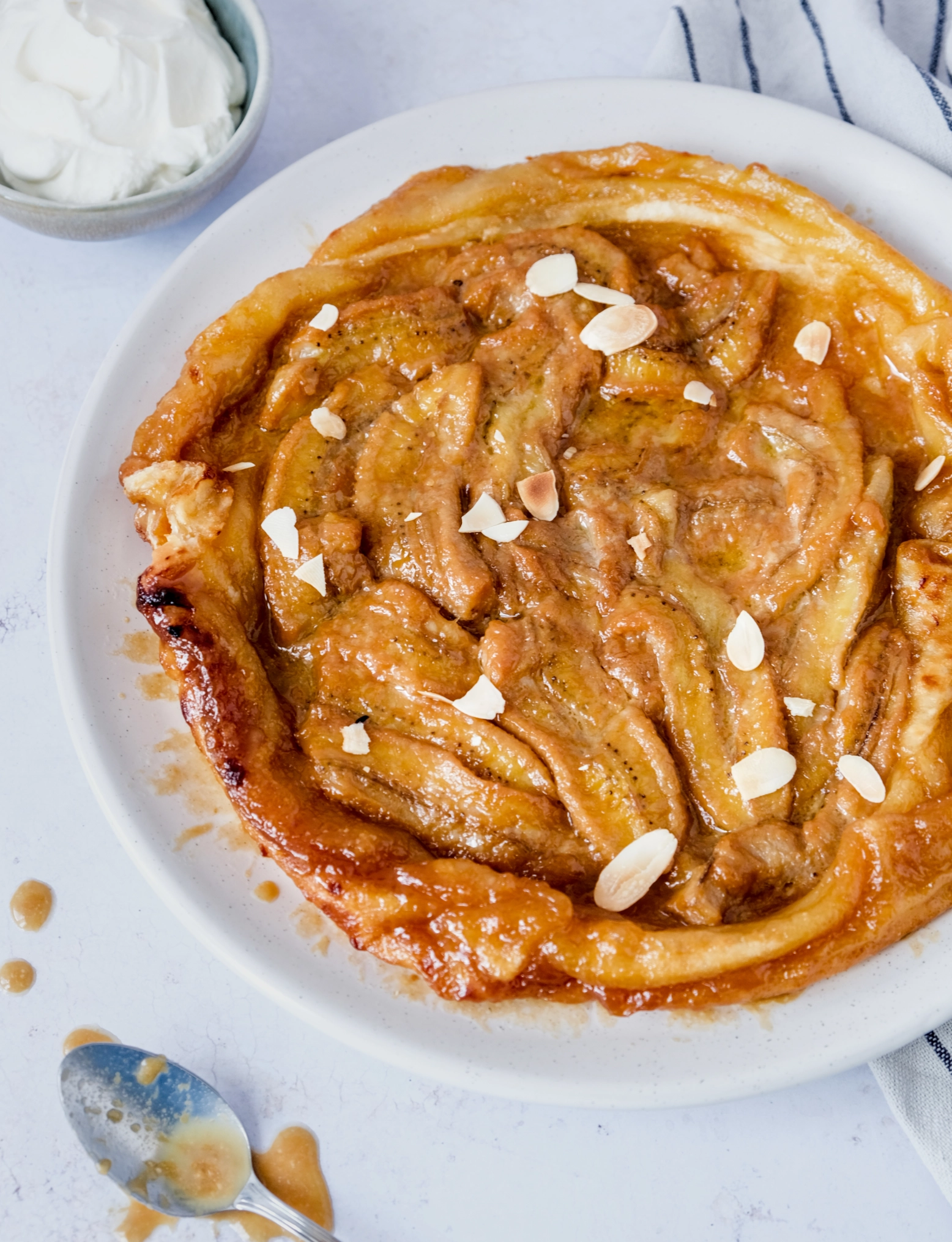
More fruit dessert recipes to try
Variations
- Savoury pain perdu: skip the sugar and vanilla, season the custard with salt, pepper and nutmeg, and top with cheese or ham. Closer to the dish’s medieval savoury roots.
- With orange blossom water: a splash in the custard, a fragrant touch found in some southern French versions.
- Caramelised, crème brûlée style: dust the fried slices with sugar and blowtorch or grill until it crackles, for a pâtisserie finish.
- With fruit: strawberries and crème fraîche in summer, or caramelised apples in autumn, which turn it into a proper dessert.
- Brioche perdu with caramel: use brioche and serve with a salted butter caramel, which is how a lot of French brasseries plate it now.
- Vegan: a custard of plant milk, a little cornflour and chickpea flour in place of the eggs, with vanilla and a pinch of turmeric for colour makes a vegan version!
FAQ
What’s the difference between pain perdu and French toast?
They’re the same dish in different countries. American French toast tends to be thinner, sweeter and served with maple syrup, while French pain perdu is thicker, less sweet, and served with icing sugar or jam. Pain perdu is the older, original version.
Why is it called lost bread / pain perdu?
Because it rescues bread that would otherwise be lost, thrown away once it had gone stale. Soaking it in custard and frying it gives a dry loaf a delicious second life, which is the whole origin of the dish.
What bread is best for pain perdu?
Day-old brioche gives the richest result, with a good day-old country loaf a more rustic alternative. The bread needs to be a little stale so it absorbs the custard without turning to mush. Avoid thin sliced sandwich bread.
Can you make pain perdu ahead of time?
Mix the custard the night before to speed up breakfast, but soak and fry the bread fresh, since the crisp crust softens as it sits. Cooked pain perdu reheats in a hot oven but is best straight from the pan.
Do you have to use stale bread for French toast?
Day-old is strongly preferred. Fresh bread soaks up too much custard too fast and falls apart in the pan, while slightly stale bread absorbs steadily and holds its structure.



 Prep Time 10 minutes
 Cook Time 10 minutes
 Total Time 20 minutes
 Servings 4
Description
Day-old bread or brioche soaked in vanilla custard and fried to golden, crisp on the outside and soft inside. Rich, comforting, a little boozy if you dare with a drop of Armagnac. Pain perdu is the French way of saving lost bread!
Ingredients
- white bread old bread or brioche
- 3 egg
- 200 ml whole milk
- 50 ml heavy cream
- 50 gr sugar
- 25 gr unsalted butter for frying
- 1 tsp vanilla extract
- 1 splash Armagnac for an authentic French twist
- 1 pinch salt
Equipment




1 plate for soaking bread
Instructions
1. Prepare the mix
- Whisk the eggs with the sugar and salt until combined. Add the milk, cream, vanilla and Armagnac if using, and whisk until smooth.
2. Slice
- Cut the bread or brioche into thick slices, 2–3cm. Day-old or slightly stale works best, as it absorbs the custard without falling apart.
3. Soak
- Soak each slice in the custard so both sides are well saturated but not soggy. Rest the slices on a plate for a moment so the custard settles into the bread.
4. Fry
- Heat the butter in a pan over medium until foaming. Add the soaked slices and fry 2–3 minutes a side, until deep golden. Turn carefully to keep their shape.
5. Serve immediately
- Serve straight away, dusted with icing sugar. Pain perdu should be crisp outside and soft and custardy within.
Notes
- Day-old brioche or a rustic white loaf gives the best result. Avoid thin sandwich bread.
- Keep the heat medium: too hot burns the outside before the centre sets, too cool and it turns greasy.
- A splash of Armagnac or rum in the custard adds depth for an adult version.
- Serve with icing sugar, jam, fresh fruit, or a drizzle of honey.
Share your feedback and spread the love!
If you try this recipe, I’d love to hear how it turns out! Leave a ★★★★★ rating and your thoughts in the comments, it helps fellow French foodies discover this recipe too. Snap a photo and tag @obviously.french on Instagram. Come talk about it in our Facebook group. And don’t forget to save this recipe to Pinterest so you’ll always have it handy for your next French-inspired meal!